When a neighborhood undergoes major redevelopment—whether it’s a historic downtown district adding high-rise apartments, or an older suburb expanding to accommodate new commercial plazas—the most visible changes happen above ground. You see demolition crews, heavy excavators, and towering cranes reshaping the skyline.
However, some of the most dramatic transformations are entirely hidden from view, taking place inside the complex, pressurized network of underground water mains.
A city’s water infrastructure is a finely balanced system engineered around predictable demands, stable pressures, and established fluid velocities. When massive redevelopment projects alter the urban landscape, they subject the surrounding pipe network to intense physical, chemical, and hydraulic forces. Here is exactly what happens inside the pipes beneath your streets during a major structural overhaul.
1. Velocity Shocks and the “Scouring” Effect
Under normal, daily operating conditions, water moves through a neighborhood’s distribution mains at a steady, predictable pace. When extensive development alters neighborhood consumption and flow dynamics, engaging professional commercial water testing services in Queens provides objective data on whether distribution shifts are loosening legacy deposits into local water connections. Over decades of service, this consistent flow allows a thin, stable layer of mineral scale, calcium deposits, and iron oxidization (rust) to form along the interior walls of the pipes.
During redevelopment, construction crews frequently have to open or close massive street-level isolation valves to reroute water to new building sites. Every time a major valve is adjusted, it triggers a dramatic shift in fluid dynamics. Water that was once moving at two feet per second might suddenly stop, reverse direction, or surge forward at double its normal velocity.
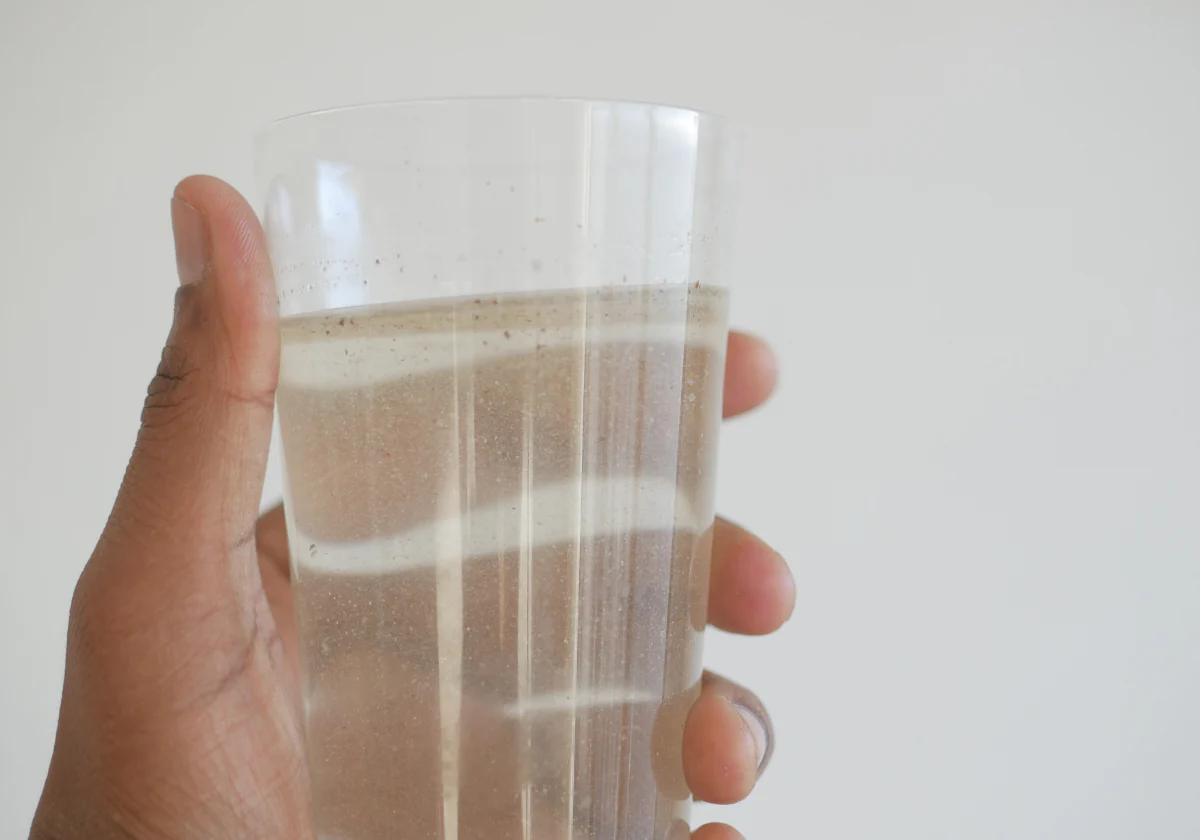
This sudden surge creates a physical phenomenon known as velocity shock. The turbulent, high-velocity water acts like an internal pressure washer against the brittle pipe walls. This process, called scouring, violently shears off the accumulated mineral crust and loose rust flakes, suspending them directly into the water column. This dislodged debris travels through the network as a dense sediment wave, which can cause sudden discoloration or a heavy metallic taste when it reaches nearby residential taps.
2. Pressure Differentials and Micro-Breaches
Water grids are kept under continuous, high hydraulic pressure for two reasons: to push water upward into multi-story buildings and to prevent external contaminants from entering the clean water stream.
Large-scale construction projects disrupt this pressure balance in several ways. When a crew connects a massive new commercial complex to the existing grid, the initial filling of those massive internal lines can cause a localized drop in water pressure across the immediate neighborhood. Conversely, when a project wraps up and water demand suddenly stops overnight, the grid can experience a sharp pressure rebound.
These rapid pressure fluctuations place immense physical stress on the joints, gaskets, and seams of older, legacy water mains.
[Normal Operation: High Internal Pressure]
   Pipes stay sealed; external groundwater is kept out.
                ↓↓↓
[Redevelopment Shock: Pressure Drops/Surges]
   Joints flex → Micro-fractures develop → Silt/Groundwater seeps in.
If the neighborhood uses older cast-iron or concrete pipes, these continuous pressure cycles cause the infrastructure to flex and shift. Over time, this stress creates micro-breaches—tiny fractures or loosened pipe joints. When the line pressure drops even briefly, the surrounding groundwater, soil silt, and fine sand can be sucked directly into the clean water network through these microscopic gaps.
3. Directional Flow Reversals and Stagnation Pockets
Urban water grids are typically laid out in a looping pattern to keep water circulating continuously. However, redevelopment often requires cutting off certain loops or capping legacy lines to make room for new foundations, turning active transit pipes into temporary or permanent “dead ends.”
When a pipe becomes a dead end, the water inside it completely stops moving, creating a stagnation pocket. Without continuous flow, this sitting water rapidly degasses, losing its dissolved oxygen and turning flat or stale.
Furthermore, because the water is no longer moving, the chemical disinfectants (like chlorine or chloramines) added at the treatment plant naturally decay and dissipate within a matter of days. Without this protective chemical barrier, these stagnant pockets can become localized breeding grounds for biofilm and bacterial growth. When water routing shifts again later in the construction phase, this stale, de-chlorinated water can be pushed back into the main stream, altering the taste and odor profile of the entire block.
4. The Structural Impact of Ground Vibrations
The heavy machinery required for redevelopment—such as pile drivers, deep-earth compactors, and continuous heavy truck traffic—sends intense, localized seismic vibrations rippling through the surrounding soil.
Buried water mains are surrounded by a bedding layer of gravel or sand designed to absorb minor shifts. However, prolonged, high-intensity construction vibrations can cause the surrounding soil to settle unevenly, a process known as differential settlement.
As the earth shifts beneath a pipe, it deprives the rigid structure of its baseline support. This uneven loading creates immense bending stress along the pipeline. In older properties, this structural strain can cause the private main service line—the underground connection running beneath the front lawn—to crack or pull away from the city main entirely. For a deeper analysis of how these subterranean vibrations and external disruptions alter local water delivery, exploring the broad operational blueprints of city events disturbances can provide excellent technical perspective.
5. How Construction Shocks Echo Inside Your Home
While all of these physical and hydraulic transformations are taking place beneath the asphalt, they eventually find their way to your property line. When the scoured sediment, trapped air pockets, and loose scale travel through your private plumbing, they hit a major bottleneck right at your faucets.
Modern sinks and showers are equipped with aerators—fine-mesh screens screwed onto the tip of the spout designed to create a smooth, splash-free stream. The heavy sediment waves kicked up by street-level redevelopment travel directly into these screens. The particles become tightly wedged against the mesh, restricting water flow, causing low pressure, and trapping mineral flavors right at the finish line.
[Street Main Scouring] → [Debris Enters Service Line] → [Sediment Trapped at Aerator Mesh]
Regularly clearing these terminal points is an essential part of managing your indoor environment during local growth phases. Taking the time to unscrew, rinse, and upgrade your internal inside buildings plumbing components ensures that street-level structural shocks don’t turn into permanent restrictions inside your home.
Structural Dynamics Inside Pipes During Redevelopment
Tracking how specific construction activities translate into physical changes inside your plumbing can help you protect your home appliances:
| Construction Activity | Physical Reaction Inside Pipes | Immediate Symptom at the Faucet | Recommended Household Action |
| Valve Adjustments & Rerouting | Velocity shocks; scouring of internal iron rust and calcium scale. | Yellow, orange, or tea-colored water; sharp metallic taste. | Run a high-volume, un-aerated cold tap (like a bathtub) until the water runs clear. |
| Excavation & Pile Driving | Ground vibrations; soil shifting; differential pipe settlement. | Sudden drops in baseline pressure; persistent sputtering. | Check your front lawn for uncharacteristic soggy spots or pooling water. |
| Main Depressurization | Low-pressure voids; atmospheric air rushing into empty line segments. | Sputtering, foaming flow; milky white cloudiness that clears over time. | Avoid running hot water or appliances (like dishwashers) until the air vents completely. |
| Line Capping & Isolation | Creation of dead-end mains; disinfection decay; fluid stagnation. | Stale, flat mouthfeel; faint earthy or sulfurous aroma. | Use a certified carbon block filter to remove localized taste and odor anomalies. |
By recognizing that major neighborhood redevelopment acts as a massive mechanical and hydraulic disruptor to the underground grid, you can take a highly proactive approach to your water quality. Utilizing strategic cold-water flushes, clearing out terminal fixture screens, and monitoring your home’s baseline performance allows you to easily ride out the local structural upgrades while enjoying a safe, clean, and reliable flow.
Are you interested in learning more about how modern civil engineers map, monitor, and balance public utility networks during rapid urban expansion? Expand your structural knowledge of public utility design by reviewing our detailed infrastructure columns on our blog.