When construction crews cut into, repair, or reroute municipal water mains, they trigger a series of physical and hydraulic reactions that violently disrupt the stable environment inside those pipes.
To understand what construction does to sediment, you have to picture the inside of a water main. Over years or even decades of continuous service, water mains accumulate a layer of settled mineral sediments (mostly iron, manganese, and calcium scales) and a microscopic organic biofilm along their bottom and side walls. Under normal conditions, a steady, predictable flow of water keeps this layer undisturbed.
When heavy construction or utility repairs begin, that stability is instantly shattered in three distinct ways:
1. The “Water Hammer” and Physical Vibration
Heavy machinery—like jackhammers, excavators, and compactors vibrating the ground directly above or near buried water lines—transmits intense mechanical shockwaves through the soil and into the pipe walls.
Furthermore, when construction crews rapidly shut off large isolation valves to work on a specific section of a pipe, it causes a hydraulic shock wave known as water hammer. This sudden stoppage forces a high-pressure wave to bounce back and forth through the pipeline. The combination of ground vibrations and hydraulic shock waves acts like an earthquake inside the pipe, fracturing brittle mineral scales and knocking heavy sediment loose from the pipe walls.
2. Extreme Velocity Shifts and Turbulent Scouring
Before construction can start, utilities often have to bypass water networks or isolate segments, which drastically changes the direction and speed of the water flowing through nearby lines. Later, when the repair is finished and the main valves are reopened, water rushes back into the empty or depressurized pipes at a very high velocity.
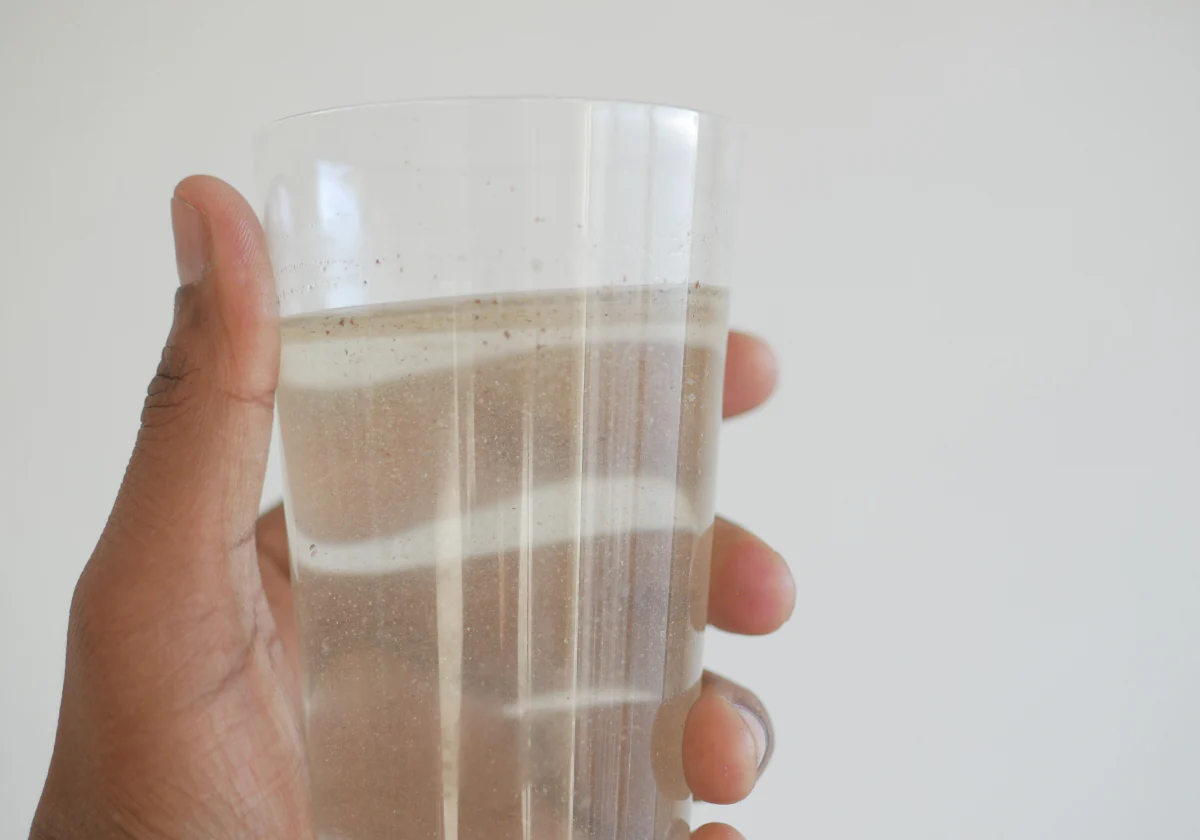
This sudden rush creates extreme turbulence. Instead of a smooth, predictable stream, the water rolls and tumbles violently. This turbulent water acts like a pressure washer, scouring the inner lining of the mains and lifting tons of settled, heavy sediment into suspension, turning clear water into a muddy, discolored slurry.
3. External Ingress (Direct Contamination)
Whenever a water main is physically cut open for a repair or a new connection, the sealed environment is broken. Despite the best efforts of utility crews to pump out the trench, a certain amount of external dirt, silt, sand, and groundwater inevitably slips into the open pipe during the physical construction process.
Once the pipe is reconnected and pressurized, this newly introduced outdoor sediment mixes with the existing internal pipe scale, traveling downstream toward residential service lines.
What Happens to This Sediment Next?
Once construction kicks up this sediment, it doesn’t just disappear. It moves through the infrastructure and can impact your home in a few ways:
- Hydrant Flushing: This is why you will frequently see utility workers opening neighborhood fire hydrants after a construction project. They are intentionally creating a high-volume exit point to dump millions of gallons of this heavily sedimented, discolored water onto the street before it can branch off into residential plumbing.
- Domestic Clogging: If you turn on your taps too soon after nearby construction, that suspended sediment is drawn straight into your home. It can quickly clog your water softener, ruin whole-house filtration cartridges, and choke the tiny mesh aerators on your sinks and showerheads.
If construction is happening on your street, it is always a good idea to leave your taps off until the work is completely finished, and then flush your lines using an outdoor spigot or a bathtub faucet to bypass your delicate fixtures.